Vintage Garden Seeds
White Blossom Sweet Clover (Melilotus officinalis var. alba) Sweetclover Honey Clover Flower Seeds
White Blossom Sweet Clover (Melilotus officinalis var. alba) Sweetclover Honey Clover Flower Seeds
Couldn't load pickup availability
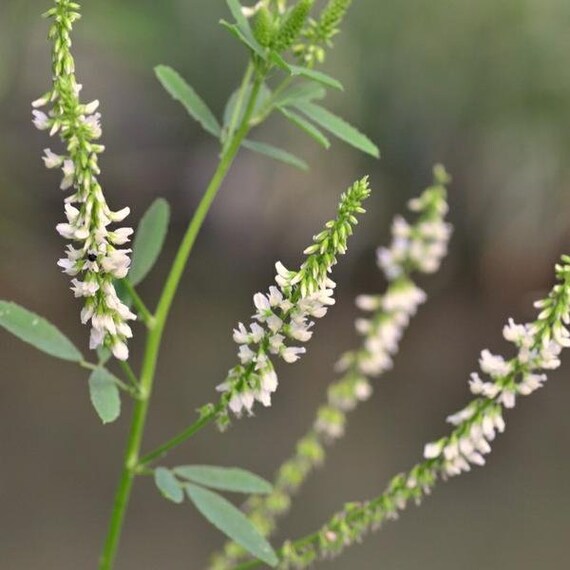
White Blossom Sweet Clover (Melilotus officinalis var. alba) is a hardy biennial known for its delicate white flower spikes and sweet fragrance. This versatile plant is prized for its high nectar yield, making it a top choice for beekeepers and pollinator gardens.
Besides being a powerful pollinator plant, this non-GMO sweetclover also helps improve soil structure and fertility due to its deep taproot and nitrogen-fixing ability. It thrives in well-drained soils and full sun, growing up to 4–6 feet tall and providing long-lasting blooms from early summer to fall.
White Blossom Sweet Clover is widely used in wildflower meadows, honey production, erosion control, and as a green manure crop — offering beauty and ecological benefits in one easy-to-grow plant.
Features
- Produces fragrant white flower spikes rich in nectar
- Non-GMO and ideal for bee forage and honey production
- Nitrogen-fixing cover crop that improves soil health
- Thrives in poor, dry, or compacted soils
- Drought-tolerant once established
- Great for erosion control, pasture, or pollinator gardens
Specifications
- Seed Type: Melilotus officinalis var. alba seeds
- Common Name: White Blossom Sweet Clover, Honey Clover
- Plant Type: Biennial Flowering Herb
- Plant Height: 4 – 6 feet
- Zones: USDA Zones 3–9
- Light Requirement: Full Sun
- Soil Type: Well-draining, sandy, loamy, or disturbed soils
- Germination Time: 10 – 20 days
- Days to Maturity: Blooms in second year
- GMO Status: Non-GMO
- Season: Spring or fall planting
- Planting Depth: 1/4 inch
- Spacing: 6 – 12 inches
- Optimal Temperature: 65°F to 75°F (18°C to 24°C)
- Watering: Low to moderate water needs
- Companion Plants: Alfalfa, Buckwheat, Crimson Clover
- Bloom Time: Early summer to early fall
- Pollinator Support: Excellent for bees, butterflies, and beneficial insects
- Soil Improvement: Nitrogen fixer, deep-rooted soil conditioner
- Uses: Pollinator gardens, erosion control, green manure, wildlife habitat
- Storage: Keep unused seeds in a cool, dry place
Planting Guide
- Direct Sow: Plant outdoors in early spring or fall.
- Seed Prep: Scarify seeds or soak for 24 hours to improve germination.
- Sowing: Broadcast or drill seeds at shallow depth; keep soil moist until established.
- Growth: Tolerates drought and poor soils; minimal care required.
- Maintenance: Can be mowed after flowering to control spread or plowed under as cover crop.